Top 5 Questions to Ask When Buying a Used Car
Posted Friday, Oct 10, 2025
Buying a used car can feel overwhelming, especially with so many makes, models, and sellers to choose from. Unlike purchasing a new vehicle, where the condition is guaranteed, buying a used car requires extra attention to detail and asking the right questions. A single overlooked factor—such as repair history, mileage, or financing terms—can turn what looks like a great deal into a costly mistake.
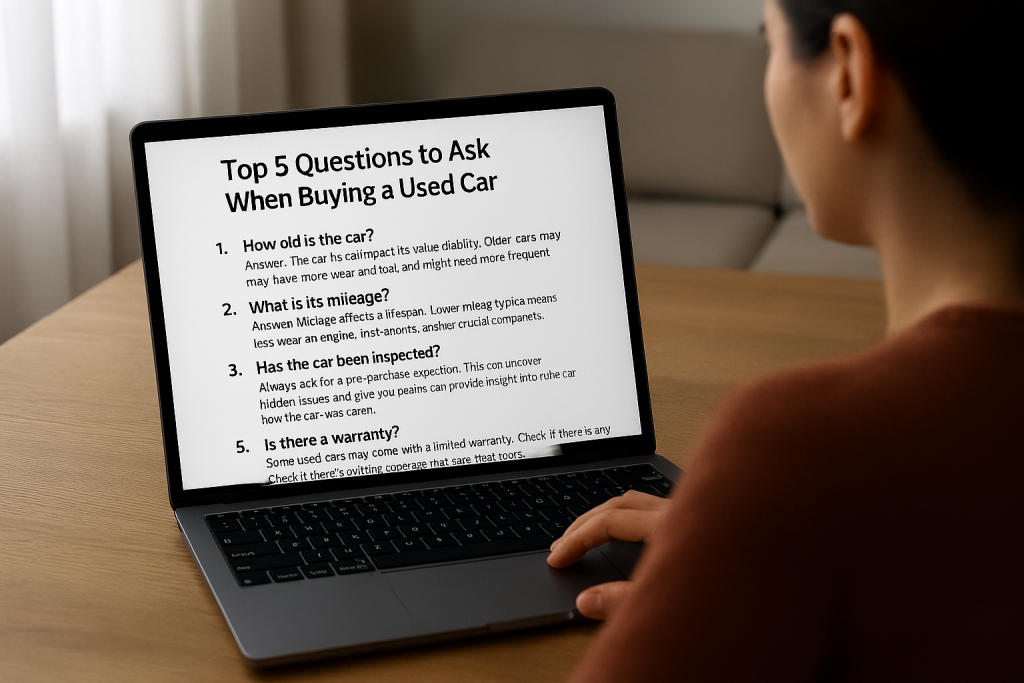
That’s why knowing the top questions to ask when buying a used car is critical. These questions not only help you avoid potential issues but also empower you to negotiate fairly, understand the car’s true value, and make a confident decision. Whether you’re shopping from a dealership or considering a car from a private seller, asking these questions will ensure you get the car you want without regret.
Let’s dive into the most important things you should ask before you buy.
What Is My Budget for Buying a Used Car?
Before walking into a dealership or meeting private sellers, the first question you need to answer is about your budget. Buying a used car isn’t just about the sticker price—you also need to account for:
- Monthly payments on a used car loan
- Car insurance premiums
- Regular maintenance and repair costs
- Possible replacement parts for older models
For example, a vehicle with a low purchase price but high insurance costs may not be a cost-effective choice in the long run. Using auto loan calculators can help you estimate payments based on your credit score, interest rate, and loan terms.
Setting a realistic budget ensures you’re not just buying the car you want but also preparing for the financial responsibility that comes with owning it.
What Is the Vehicle’s History Report?
One of the most important questions to ask when buying a used car is about the vehicle's history. A vehicle history report provides insights into previous owners, accident history, and whether the car has a clear title or has been involved in any incidents that could impact its value.
Look for details such as mileage records, service history, and any signs of structural damage or water damage. This information can help you avoid cars with hidden problems and give you peace of mind knowing the car’s history before making a purchase.
Has the Car Had Any Major Repairs?
Another key question to ask when buying a used car is about its repair history. Understanding whether the vehicle has undergone major repairs—such as engine replacement, transmission work, or frame welding—can reveal how well it’s been maintained.
- Cars with frequent repairs might indicate mechanical problems or poor upkeep.
- Repairs completed by a certified mechanic are generally more reliable than those made by unqualified individuals.
- Ask for receipts or service records to confirm the work.
For example, if a vehicle has had its transmission rebuilt recently, that may extend its life. But if it’s been repaired multiple times for the same issue, it could signal recurring problems.
Always ask the seller for repair documentation. It helps you determine whether the car is worth its asking price.
How Many Miles Has the Car Been Driven?
The mileage of a used car is a crucial factor in determining its value and potential longevity. Cars with higher mileage might come at a lower initial cost but could require more maintenance and repairs over time. Conversely, low-mileage cars might be more expensive but could save you money in the long run.
When evaluating the mileage, consider the car’s make and model. Some vehicles are known for their durability and can handle higher mileage better than others. A test drive can also help you assess how the car handles and whether it feels right for you.
What Safety Features Does the Vehicle Offer?
In today’s market, safety features are just as important as affordability. When buying a used car, you should always ask about its safety ratings and equipment.
Common safety features to look for include:
- Airbags (front and side)
- Anti-lock braking system (ABS)
- Electronic stability control
- Backup cameras and parking sensors
- Advanced driver-assist technology on newer models
Check whether the car has been subject to any manufacturer’s recalls and confirm that all safety features are functioning properly.
Remember, asking these questions ensures that you’re not just buying a vehicle but also protecting yourself and your passengers.
Should I Trust the Dealership or Private Seller?
Whether you’re buying a used car from a dealership or a private seller, trust and transparency matter.
- Dealerships often provide certified pre-owned vehicles, warranties, and financing options.
- Private sellers may offer lower prices but typically sell “as-is,” with no guarantee.
If you’re dealing with a private seller, ask when buying a used car about their reason for selling and whether they have maintenance records. If you’re working with a dealership, read reviews and check their reputation.
A trustworthy seller, dealer, or private will be open about the car’s history, repairs, and condition.
What Is the Car’s Value and Fair Price?
Understanding the fair price of the car is essential to ensure you’re getting the best deal. Research the make and model to determine its market value based on its mileage, condition, and features. Websites like Kelley Blue Book or Edmunds can provide you with current pricing information.
Don't hesitate to negotiate the price based on your findings. If you discover that similar models are priced lower, use that information to advocate for a fair deal. Remember, cars depreciate over time, and knowing the car’s value can help you make a sound investment.
What Financing Options Are Available?
When considering buying a used car, it's important to explore financing options. Ask about available auto financing deals, including interest rates and terms for a used car loan. A good rate can significantly lower your monthly payment and the overall cost of the vehicle.
Additionally, consider shopping around for financing before visiting a dealership. This can give you leverage when discussing financing options and help you secure a better deal. Always read the fine print to ensure you understand the terms and conditions of the loan.
Have I Taken a Test Drive?
One of the most critical steps in the car-buying process is taking a test drive. This allows you to evaluate how the car handles, its comfort level, and whether it meets your expectations. During the test drive, pay attention to how the car accelerates, brakes, and responds to steering.
Don't hesitate to test the car on various road conditions to get a comprehensive feel for its performance. If possible, have a trusted mechanic accompany you to assess any potential mechanical problems.
Am I Prepared for Insurance Costs?
Before making a purchase, consider the insurance costs associated with the used car you intend to buy. Different makes and models can have varying insurance premiums, which can impact your overall budget. Ask insurance providers for quotes on the specific vehicle you’re interested in.
Being informed about insurance costs can help you avoid surprises after the purchase. Make sure you factor these costs into your budget to ensure that you can comfortably afford the vehicle.
FAQ: Buying a Used Car
- What is the best mileage for a used car?
The best mileage depends on the make and model. Generally, cars under 60,000 miles offer better longevity, but well-maintained vehicles with higher mileage can also be reliable.
- Is it better to buy from a dealership or a private seller?
Dealerships often provide certified pre-owned vehicles, warranties, and financing options, while private sellers may offer lower prices but fewer protections. Choose based on your comfort with risk and budget.
- How do I know if I’m paying a fair price for a used car?
Research the car’s value using Kelley Blue Book or Edmunds. Compare similar listings in your area to ensure you’re getting a competitive deal.
- Should I get a pre-purchase inspection?
Yes. A trusted mechanic can identify hidden issues, giving you confidence in your decision or bargaining power to negotiate repairs.
- Can I negotiate the price of a used car?
Absolutely. Armed with research on the vehicle’s history, condition, and market value, you can negotiate with both dealerships and private sellers to get the best deal.
Key Takeaways
- Set a realistic budget that includes loan payments, insurance, and repairs.
- Always request a vehicle history report for peace of mind.
- Ask about major repairs and request documentation.
- Evaluate mileage along with condition and maintenance.
- Prioritize safety features and recall history.
- Choose trustworthy dealerships or private sellers.
- Research the fair market value before negotiating.
- Compare financing options and loan terms.
- Never skip the test drive.
- Consider insurance costs before purchase.
Find Affordable Used Cars in Little Ferry, NJ
In conclusion, asking the right questions before you buy a car is the best way to avoid regrets and make a smart investment. Whether you’re comparing financing, reviewing a vehicle history report, or simply taking the car for a test drive, asking these questions will guide you to the best deal.
For buyers seeking affordable used cars, Caspian Sea Auto Sales LLC in Little Ferry, NJ is a trusted source. Their wide selection of reliable vehicles makes it easy to buy used cars that fit your budget and lifestyle. Whether you’re exploring certified pre-owned options or looking for used cars in Little Ferry, NJ, Caspian Sea Auto Sales LLC ensures you drive away with confidence and peace of mind.