Used Cars Checklist for First-Time Car Buyers Visiting a Dealership in Little Ferry, NJ
Posted Thursday, Apr 16, 2026
Buying a car is a big decision, and for many first-time car buyers, the process can feel overwhelming. This comprehensive used car buying checklist helps you prepare for your first visit to a dealership in Little Ferry, NJ, so you can make a confident and informed used car purchase. Whether you're upgrading from a current vehicle, planning to trade in your current vehicle, or looking for your first car, the steps below will guide you through the car-buying experience.
This guide is also relevant to Hemet car buyers who want a clear, portable checklist to compare dealerships, inspect vehicles, and plan financing. The tips and local SEO signals for Little Ferry, NJ make it easy to find the right pre-owned vehicle that fits your lifestyle and budget.
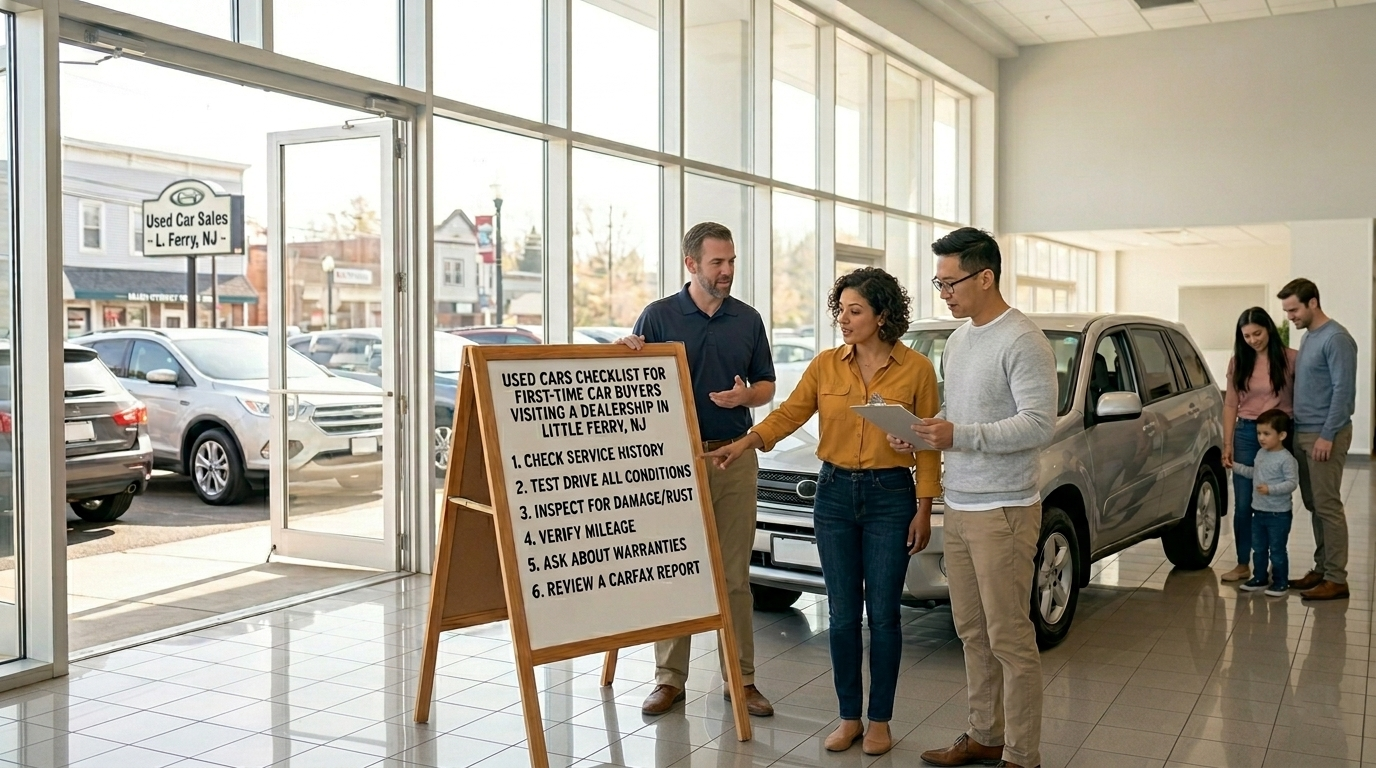
What should be on your used car checklist before visiting a dealership in Little Ferry, NJ?
Before visiting a dealership, create a comprehensive checklist that outlines your must-haves and deal breakers. That list should include budget constraints, desired mileage, warranty expectations, and whether you plan to trade in your current vehicle. Having a clear car-buying checklist will help you stay focused during showings and test drives.
Also, prepare your paperwork and financial groundwork: get pre-approved for a car loan, review your credit score, and gather maintenance records and vehicle history reports for vehicles you're considering. A prepared buyer has an advantage when negotiating price and monthly payment terms.
- Set a realistic budget and desired monthly payment.
- Get pre-approval or plan to finance with dealer financing or an outside lender.
- Print a used car buying checklist to take with you.
How should you inspect a used vehicle at the dealership?
When inspecting a used vehicle, check the exterior and interior thoroughly. Look for mismatched paint, rust, signs of accident repair, and uneven panel gaps. Open the hood, inspect fluid levels, belts, and look for leaks. If available, review the maintenance history and vehicle history reports tied to the VIN—this provides peace of mind about prior accidents or title issues.
Inside, confirm all electronics work, check seat wear, and test air conditioning and heating. Verify the odometer mileage matches the mileage records. A thorough inspection helps you understand the vehicle's overall condition and market value and can reveal items to negotiate or repair before signing.
- Ask to see the maintenance records and vehicle history reports
- Check the VIN and title for discrepancies.
- Bring a checklist to inspect the vehicle thoroughly.
What should you expect on your first visit to a dealership?
Your first visit to a dealership is primarily exploratory: you will meet sales staff, view multiple used cars, and ideally take one or more vehicles for a test drive. Expect questions about your budget, lifestyle, and whether you plan to trade in a current vehicle. Be ready to state that you are comparison shopping to keep negotiations neutral.
Dealerships may offer financing options and mention warranty packages for pre-owned vehicles. Don't feel pressured to commit; the first visit is to gather information, compare offers, and narrow choices. Make note of price quotes, dealer incentives, and any rebates or warranty options offered.
- Expect sales staff to ask about your budget and whether you plan to trade in.
- Take notes on quotes, warranty options, and financing terms.
- Take at least one test drive for vehicles that fit your checklist.
What are the benefits of using a car-buying checklist at the dealership?
A dedicated checklist simplifies the buying process by helping you compare vehicles on consistent criteria: mileage, service history, warranty status, and overall condition. It helps you avoid emotional purchases and choose the right vehicle that matches your lifestyle and budget.
Using a checklist provides documentation for negotiations and prevents missed details that can affect long-term satisfaction, like hidden repair needs or unclear title status. This approach also helps first-time buyers feel more confident and less intimidated by dealership procedures.
- Provides consistent comparisons between multiple vehicles
- Helps you negotiate based on documented conditions and market value
- Gives first-time car buyers confidence during the purchasing process
What is a step-by-step buying guide when purchasing a used car?
Follow a structured buying process to streamline your used car purchase. Start with research and pre-approval, then visit dealerships with your checklist, take test drives, inspect vehicles, compare offers, and finalize financing and paperwork. This sequence reduces surprises and speeds up the buying process.
After selecting a vehicle, negotiate the price and review the warranty or extended coverage options. Complete the sale with a thorough review of the bill of sale, title, and registration, and ensure the dealer provides copies of required documents. A clear step-by-step plan helps you walk away with the right vehicle and a clear understanding of monthly costs.
- Research and shortlist vehicles to find the perfect vehicle
- Get pre-approved for a car loan and know your credit score
- Visit dealerships in Little Ferry, NJ, and take the test drive.
- Inspect the vehicle, review the vehicle history reports, and ask for maintenance records.
- Negotiate price, discuss trade-in value, and finalize financing.
- Complete the sale: sign the bill of sale, get the title, and registration.
How can you find affordable used cars in Little Ferry?
To find an affordable used vehicle, search local dealership inventories in Little Ferry and compare listings across nearby New Jersey dealerships. Filter by price, mileage, and model year to find vehicles that fit your budget and lifestyle. Consider certified pre-owned options for additional warranty protection if available.
Look for promotions, dealer financing offers, and special sales events. Use trusted valuation tools like Kelley Blue Book to assess the fair market price and verify that the dealer’s asking price aligns with the vehicle’s condition and history. Also, be open to slightly older models with solid maintenance records to maximize value.
- Compare local dealership prices in Little Ferry, NJ, and surrounding areas.
- Use market tools like Kelley Blue Book to evaluate condition and market value.
- Consider vehicles with documented maintenance history for lower long-term cost.
What steps should you take during the test drive?
Always take a test drive when visiting a car dealer. Schedule enough time to evaluate how the vehicle performs in everyday conditions: city driving, highway speed, and while accelerating. Listen for unusual noises and pay attention to steering feel, braking, and drivetrain performance.
Bring a friend or family member for a second opinion, and follow your checklist to test every function. Test climate control, infotainment, blind-spot warnings, and other features. The test drive will help you decide if the vehicle fits your needs and whether any mechanical concerns should be flagged to the dealer.
- Drive in mixed conditions—city, highway, and stop-and-go
- Test all systems and listen for unusual sounds or vibrations.
- Bring a checklist and a companion for objective feedback.
What financing options should you consider at the dealership?
Dealerships often offer dealer financing, but it’s wise to compare rates with banks and credit unions. Having pre-approval for a car loan gives you bargaining leverage and clarifies a comfortable monthly payment. Review loan terms carefully, including length, interest rate, and any prepayment penalties.
Ask the dealer to break down all costs: taxes, fees, and optional warranty or protection plans. If you plan to trade in your current vehicle, get independent estimates of your trade-in value to help evaluate the dealer’s offer. Choose financing that fits your budget and keeps the car-buying experience stress-free.
- Get pre-qualified to understand your borrowing capacity.
- Compare financing options offered by dealerships with those available through banks and credit unions.
- Understand the total cost, not just the monthly payment.
How can you determine the trade-in value of your current vehicle?
To get the best trade-in value, research your current vehicle using tools like Kelley Blue Book and NADA Guides. Clean the car, address minor repairs, and compile service records to prove maintenance history—this can increase perceived value. Be ready to provide title and registration documents for a smooth trade-in.
Negotiate trade-in separately from the purchase price to avoid confusion. Ask the dealership for a firm trade-in offer in writing and compare it with private sale estimates. Knowing your car’s value helps you decide whether to trade it in or sell it privately for more cash toward your new ride.
- Use valuation tools (KBB, NADA) to estimate trade-in value.
- Gather maintenance records and clean the vehicle before appraisal.
- Compare dealer trade-in offers with private sale options
What maintenance and vehicle history documents should you request?
Ask the dealer for complete maintenance records and vehicle history reports that include accident history, title status, and past ownership. These documents provide context for the vehicle’s condition and can reveal patterns of neglect or recurring repairs that could signal future expenses.
If a vehicle has had major repairs, ask for parts invoices and service notes. Review the title and registration for any liens or salvage titles. Proper documentation gives you peace of mind and strengthens your negotiating position.
- Request full maintenance records and vehicle history reports.
- Verify title and registration status, including any liens.
- Ask for service invoices for major repairs or parts.
What common mistakes should first-time car buyers avoid?
Many first-time car buyers make avoidable mistakes, like skipping pre-approval, failing to inspect the vehicle thoroughly, or neglecting to check the vehicle history report. Avoid committing on the spot—take time to compare offers and read the fine print on warranty and financing terms.
Beware of dealership add-ons that increase monthly payments without clear value. Don’t be afraid to ask questions about fees, warranty coverage, or the history of the vehicle. A cautious, informed approach protects you from buyer’s remorse and ensures a fair deal.
- Make sure to complete a thorough inspection and take the vehicle for a test drive.
- Avoid agreeing to high dealer add-ons without evaluation.
- Get everything in writing, including the bill of sale and any promises.
How can a warranty provide peace of mind for used car buyers?
A warranty helps cover unexpected repair expenses and gives you added peace of mind. Some dealerships offer certified pre-owned programs with extended warranty coverage, while aftermarket warranties can be purchased for additional protection. Understand what is covered and any exclusions before buying.
Compare warranty options and prices, and assess the reliability of the vehicle model in question. A reasonable warranty can be a worthwhile investment if it fits within your monthly payment and overall budget.
- Ask for full warranty terms and covered items.
- Consider certified pre-owned vehicles for factory-backed coverage.
- Balance warranty cost against the vehicle’s reliability and maintenance history
How do I pick the right vehicle for my lifestyle and budget?
Start with a clear budget and define your must-haves: passenger space, fuel economy, and cargo. Use the checklist to score vehicles on criteria like mileage, maintenance history, and ownership costs. Test drive shortlisted vehicles to see which fits your daily routine and comfort needs.
Consider the total cost of ownership, including insurance, fuel, and maintenance. Choosing the right vehicle means balancing your lifestyle needs with a monthly payment that fits your financial plan.
Should I get pre-approved before visiting dealerships in Little Ferry?
Yes. Getting pre-approved for a car loan helps you understand what you can afford and gives you bargaining power with dealerships. Pre-approval streamlines negotiations and prevents overstretching your budget on monthly payments.
Compare pre-approval offers with dealer financing to ensure you get the best rate and terms for your situation.
What details should I check in a vehicle history report?
Look for accident history, title status (salvage or rebuilt), odometer discrepancies, and the number of past owners. Vehicle history reports and maintenance records help you understand the maintenance history and whether the vehicle has been well cared for.
Reports tied to the VIN provide crucial context and can influence price negotiations or the decision to walk away from a problematic vehicle.
How do I evaluate a dealer’s trade-in offer?
Compare the dealer’s offer with valuations from Kelley Blue Book and private sale estimates. Present maintenance records and clean documentation to support a higher trade-in value. Negotiate trade-in separately from the purchase price for transparency.
If the dealer’s offer is low, consider selling privately or visiting multiple dealerships to get competitive offers.
When should I walk away from a deal?
Walk away if the vehicle has a concerning history (salvage title or major undisclosed accidents), if the dealer refuses to provide documentation, or if the total cost exceeds your budget despite negotiations. Also, walk away if pressure tactics are used or key terms aren’t provided in writing.
There are always other dealerships and used vehicles; leaving an uncomfortable situation protects your long-term interests.
Key takeaways
In short, a solid car-buying checklist prepares you for a successful trip to a Little Ferry dealership. Prioritize research, pre-approval, vehicle inspection, and a thorough test drive. Use trusted valuation tools like Kelley Blue Book to assess price and compare trade-in value offers.
Document everything, ask questions, and don’t rush the decision. A methodical approach to purchasing a used car will help you find the perfect used vehicle that fits your lifestyle and budget while providing peace of mind.
Conclusion
Visiting a car dealer can be rewarding when you come prepared. Use this comprehensive checklist to guide your first visit to a dealership in Little Ferry, NJ. From researching used cars and securing pre-approval to taking the test drive and reviewing vehicle history reports, each step helps you make a confident, well-informed used car purchase.
Whether you’re a first-time car buyer or returning to the lot for your next vehicle, following this guide will help you avoid common pitfalls and secure an affordable used car that meets your needs. For local help finding an affordable used car, consider Caspian Sea Auto Sales LLC in Little Ferry, NJ—they can help you compare options and find a reliable, budget-friendly new ride or pre-owned vehicle.